
The industrial sector depends heavily on precision-fabricated components to keep operations running smoothly and safely. Among the most critical of these components are bent pipe assemblies, which appear in refineries, chemical plants, power generation facilities, and countless other heavy industries. When manufacturers invest in custom pipe bending services in Baton Rouge, LA, they gain access to specialized expertise that directly reduces project costs and shortens the time it takes to get systems up and running. Understanding how this works requires a closer look at the fabrication process itself and what separates a high-performing pipe bending partner from a generic metal shop.
Why Custom Pipe Bending Matters in Industrial Applications
Off-the-shelf pipe fittings and standard elbows can handle routine plumbing scenarios, but industrial applications rarely fall into that category. Refineries, petrochemical plants, and manufacturing facilities often operate under extreme pressure, high temperatures, and corrosive conditions. In these environments, a poorly fitted connection or a weld that compensates for an imprecise bend can become a serious liability.
Custom pipe bending allows engineers to design piping systems that follow the exact path required by the facility layout, process flow, and equipment positioning. Instead of assembling multiple fittings to navigate around obstacles, a single precision bend can achieve the same result with fewer joints, fewer potential leak points, and a cleaner overall installation. This is why working with a qualified industrial pipe bending company in Baton Rouge, LA makes such a practical difference, particularly for facilities with complex process piping requirements.
Beyond safety and design flexibility, custom bending also reduces material waste. When pipes are bent to specification rather than cut and welded together in segments, the resulting assembly uses less raw material and requires less labor to install. Over the course of a large project, those savings add up considerably.
Key Fabrication Techniques That Drive Efficiency
Modern pipe bending fabrication services in Baton Rouge, LA rely on several proven techniques to achieve tight tolerances and repeatable results. Each method suits different pipe sizes, wall thicknesses, materials, and bend radii, so experienced fabricators choose their approach based on the specific demands of each project.
Mandrel bending is one of the most widely used techniques for thin-walled pipe and tubing. A mandrel is inserted into the pipe during the bending process to support the inner wall and prevent collapse or wrinkling. The result is a smooth, consistent bend that maintains the pipe’s original cross-sectional shape, which is critical when flow characteristics need to be preserved.
Induction bending is another popular method, particularly for larger-diameter pipe. This process uses a localized heating coil to soften the pipe material at the point of the bend, allowing the pipe to be curved gradually without compromising its structural integrity. Induction bending is especially useful for thick-walled carbon steel, stainless steel, and alloy pipes that would be difficult to cold-bend without risking damage or excessive springback.
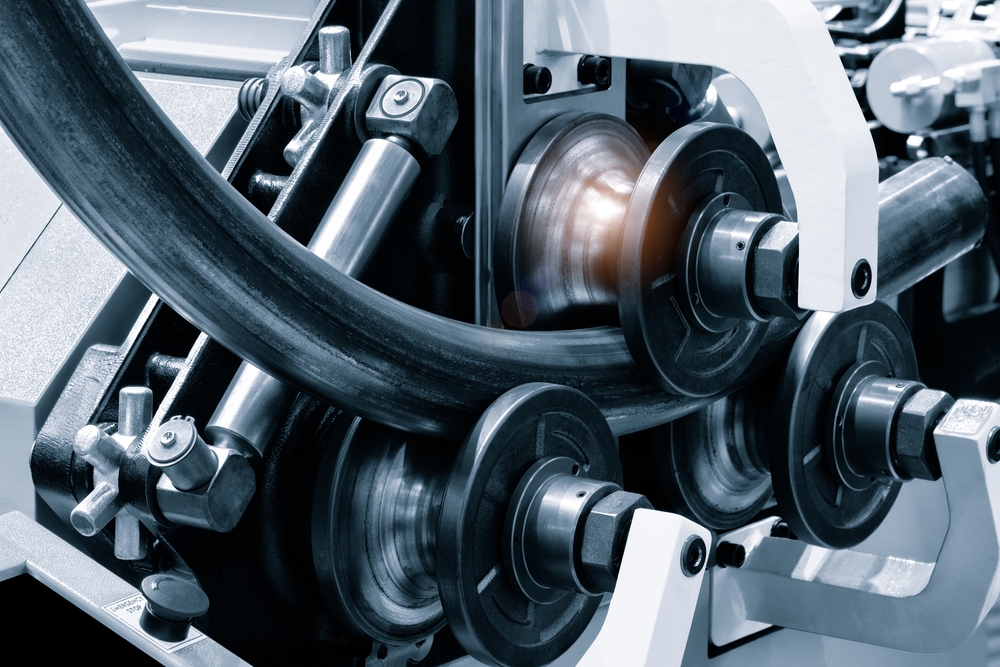
Roll bending is ideal for producing large-radius curves, often used in structural applications and low-pressure systems. By passing the pipe through a set of adjustable rollers, fabricators can create smooth arcs and curves that would be impractical to achieve through any other method.
Each of these processes, when performed by skilled operators using modern CNC-controlled equipment, produces components that are ready for immediate installation with minimal rework. That reliability is one of the primary drivers of cost reduction on large industrial projects.
Meeting ASME Standards and Regulatory Requirements
Quality assurance is non-negotiable in industrial piping systems. Most plant operators and engineering firms require that fabricated pipe components comply with standards set by the American Society of Mechanical Engineers (ASME). An ASME pipe bending manufacturer in Baton Rouge, LA operates under a rigorous framework of material verification, dimensional inspection, and documentation that ensures every component meets the applicable code requirements.
ASME standards cover a wide range of considerations, including minimum wall thickness after bending, acceptable ovality limits, and the qualifications of welders and fabricators involved in the process. When a fabrication shop holds the appropriate ASME certifications, plant owners and project managers can trust that the components they receive have been produced under a controlled quality management system, not simply checked at the end of the line.
Compliance with these standards also simplifies the approval and inspection process during installation. When third-party inspectors or owner representatives review the documentation package for a piping system, certified components move through the process faster. That administrative efficiency translates directly into shorter project timelines and fewer costly delays.
Fabricators serving the Gulf Coast industrial corridor understand that regulatory compliance is part of the job, not an optional add-on. Facilities in this region are subject to oversight from federal agencies, state regulators, and insurance underwriters, all of whom expect documentation that demonstrates compliance with recognized engineering standards.
How Local Fabrication Partners Reduce Lead Times
One of the most significant advantages of working with a regional fabrication partner is the reduction in lead time. When a facility in the Baton Rouge, LA area sources custom pipe bending services in Baton Rouge, LA from a local shop, the logistics of the project change dramatically compared to sourcing from a distant supplier.
Shipping large, heavy pipe assemblies across long distances takes time and introduces risk. Delays at ports, weather events, and carrier capacity issues can all push a delivery back by days or weeks. Local fabricators eliminate most of these variables. A shop located nearby can receive materials, begin fabrication, and deliver finished components within a timeline that supports the project schedule rather than dictating it.
Proximity also facilitates better communication. Project engineers and procurement teams can visit the shop floor, review progress in person, and address any design questions before they become fabrication errors. That kind of direct collaboration is difficult to replicate when working with a supplier located in another region or overseas.
For turnaround projects and planned maintenance shutdowns, where every hour of downtime carries a direct cost, having a local fabrication partner on call is a competitive advantage. An industrial pipe bending company in Baton Rouge, LA that understands the demands of refinery turnarounds and plant shutdowns can prioritize work accordingly, keeping projects on schedule even when timelines are compressed.
Local fabricators also tend to have established relationships with regional material suppliers, which means they can source pipe stock, fittings, and specialty alloys faster than a shop that relies on national distributors. Those supply chain connections are built over years of doing business in the same market and cannot be replicated overnight.
Conclusion
Industrial facilities that invest in pipe bending fabrication services in Baton Rouge, LA gain more than just custom components. They gain a fabrication partner that understands the pace, the standards, and the stakes of industrial work in one of the most active petrochemical regions in the country. From ASME-compliant documentation to fast local turnaround, the right pipe bending manufacturer delivers measurable value at every stage of a project. Choosing a qualified ASME pipe bending manufacturer in Baton Rouge, LA is not just a procurement decision; it is a strategic investment in project quality and operational reliability.
Need an Industrial Machine Shop in Baton Rouge, LA?
Established in 1956, our team here at Metal Works Corporation is an A.S.M.E. certified industrial fabrication company specializing in pipe and tube bending, pipe fabrication, coiling, vessel fabrication, and welding for major industries. Our in house’ machine shop has unique capabilities and produces specialty springs of all alloys, custom rotating mechanical seals, and various other industrial components. We appreciate our customers and work to forge lasting relationships built on trust and reliability. Contact us today and allow our team to be the shortest distance between problem and solution for your unique industrial requirements.