
In the heart of Louisiana’s industrial corridor, chemical plants and refineries operate under conditions that leave little room for compromise. From extreme pressure fluctuations to highly corrosive fluid transport, the demands placed on piping systems are unlike anything found in standard commercial construction. For facilities in Louisiana and across the Gulf Coast region, partnering with an industrial pipe fabrication company in Baton Rouge, LA has become a strategic decision that directly impacts safety, efficiency, and long-term operational costs.
Off-the-shelf pipe components may work perfectly well in low-stakes environments, but inside a working refinery or chemical processing facility, a poorly fitted joint or an undersized elbow can trigger catastrophic failure. This is why custom pipe fabrication has emerged as the gold standard for industrial operations that cannot afford downtime, leaks, or structural compromise.
The Unique Demands of Refinery and Chemical Plant Environments
Refineries and chemical plants are not ordinary industrial settings. They process volatile hydrocarbons, aggressive acids, caustic materials, and high-temperature steam, often simultaneously across dozens of interconnected systems. Standard pipe components are manufactured to general tolerances and average performance thresholds, which simply do not align with the precision requirements of these environments.
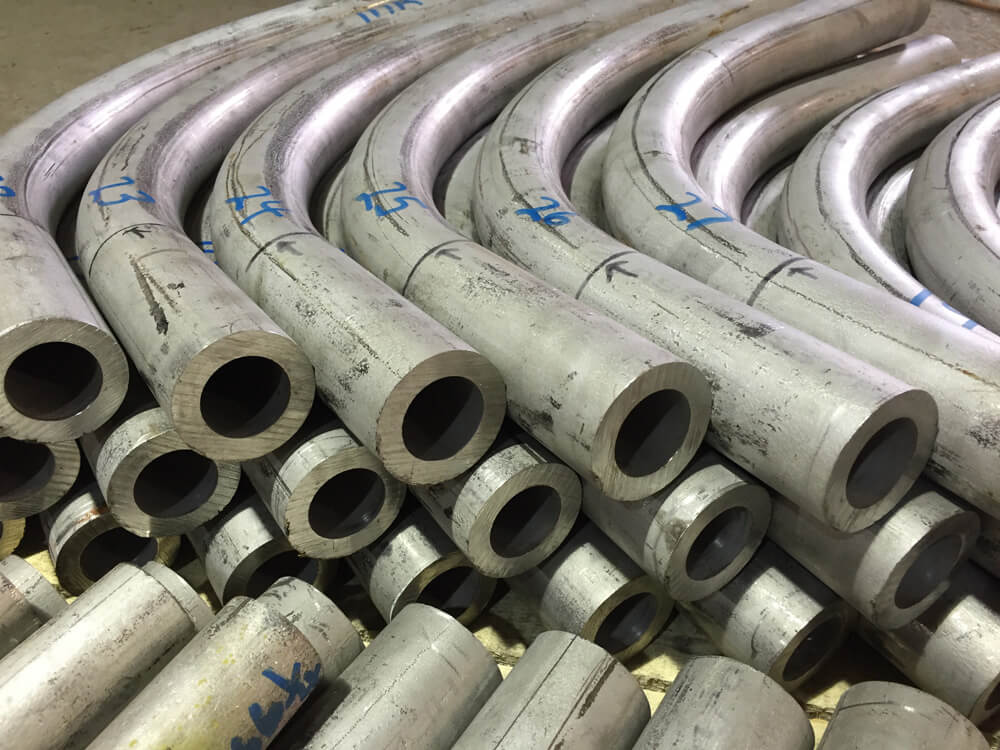
When a facility relies on refinery pipe bending services in Baton Rouge, LA, the fabrication process accounts for exact pressure ratings, thermal expansion coefficients, fluid compatibility, and spatial constraints within the plant layout. A custom-bent pipe section fits precisely where it needs to go, eliminates unnecessary fittings, and reduces the number of potential failure points within a system.
Consider the challenge of routing piping through an existing refinery structure. The available space is rarely a clean, open corridor. Pipes must navigate around structural steel, existing equipment, electrical conduits, and safety walkways. A standard elbow comes in fixed angles. A custom fabricated bend can be manufactured to any degree necessary to achieve a perfect fit without adding compensating fittings that would otherwise introduce weak points and pressure drop inefficiencies.
Why Standard Components Fall Short in High-Stakes Applications
The pipe fabrication industry offers a wide range of standardized components for good reason. Standard parts reduce lead times, lower unit costs, and simplify inventory management for general contractors and light industrial users. But for chemical plant pipe fabrication in Baton Rouge, LA, these benefits are often outweighed by significant drawbacks.
Material limitations represent one of the most pressing concerns. Standard pipe components are typically available in a limited range of materials, primarily carbon steel, basic stainless grades, and common alloys. Chemical plants frequently require specialty alloys such as Hastelloy, Inconel, duplex stainless steel, or titanium to handle specific fluid chemistries without accelerated corrosion. Custom fabricators source and work with these materials to specification, ensuring the finished product is chemically compatible with what it will carry.
Dimensional constraints create additional complications. Process piping in a refinery is often designed to exact engineering specifications developed by the facility’s own process engineers. Wall thickness, bore diameter, and end preparation must match these specifications precisely. Standard components are designed to fit the most common applications, not the most demanding ones. When a standard part does not match the engineering spec, facilities are sometimes tempted to use it anyway, introducing a compromise that can have serious consequences over time.
Pressure and temperature ratings present yet another gap. Standard catalog components are rated for typical operating conditions. Hydrotreating units, reformers, and high-pressure separators operate well beyond these typical parameters. Custom fabricated components are engineered and tested specifically for the operating conditions present in a given unit, providing a margin of safety that catalog parts simply cannot guarantee.
The Strategic Advantages of Working With a Local Fabrication Partner
Choosing custom pipe fabrication for refineries in Baton Rouge, LA means more than just getting parts made to order. It means establishing a working relationship with a fabricator who understands the regional industry, is familiar with local codes and inspection requirements, and can respond quickly when unplanned shutdowns or turnaround work demands rapid turnaround on custom components.
Geographic proximity matters enormously in this industry. When a turnaround is underway and a critical spool piece needs to be fabricated and delivered within a tight window, a local industrial pipe fabrication company in Baton Rouge, LA can mobilize resources, coordinate inspections, and deliver finished assemblies in a timeframe that a distant manufacturer simply cannot match. Reduced shipping distances also lower the risk of damage in transit for large or complex fabricated assemblies.
Local fabricators also tend to develop deep familiarity with the specific facilities they serve. They understand the existing piping systems, the materials of construction in use throughout a plant, and the quirks of various process units. This institutional knowledge accelerates project execution and reduces the likelihood of errors that require costly rework.
Beyond logistics, a local partner provides easier access for field verification, joint reviews, and pre-fabrication walkthroughs. Before a single weld is made, the fabrication team can physically visit the site, take field measurements, review fit-up conditions, and confirm that the design intent is achievable. This level of coordination is far more difficult to achieve when working with a supplier located in another state or country.
Quality Control, Certification, and Code Compliance in Custom Fabrication
One of the strongest arguments for custom pipe fabrication in critical industrial applications is the rigorous quality control framework that reputable fabricators maintain. Chemical plants and refineries are subject to extensive regulatory oversight from agencies including OSHA, the EPA, and state-level environmental regulators. Piping systems must be fabricated, inspected, and documented in compliance with codes such as ASME B31.3 for process piping and ASME Section IX for welding qualifications.
A certified industrial pipe fabrication company in Baton Rouge, LA maintains documented quality management systems, employs certified welding inspectors, and can provide full material traceability from mill certification through final inspection. This level of documentation is not just a regulatory checkbox. It provides facilities with the assurance that every component installed in their systems meets the required standards and can be verified at any point in the future.
Non-destructive examination plays a central role in this process. Radiographic testing, ultrasonic testing, liquid penetrant inspection, and hydrostatic testing are all tools that custom fabricators use to verify weld integrity and component soundness before anything ships to the job site. Standard off-the-shelf components do not come with this level of scrutiny applied to individual pieces. Custom fabrication ensures that inspection keeps pace with the elevated risk profile of the application.
Weld procedure qualification is another area where custom fabricators demonstrate clear value. Welding exotic alloys or thick-wall pressure components requires qualified procedures and certified welders with demonstrated competency in those specific materials and joint configurations. A fabricator serving the refinery and chemical plant market invests heavily in procedure qualification, ensuring that the work performed meets or exceeds the standards required by the end user’s engineering specifications.
Conclusion
For chemical plants and refineries operating in demanding environments, the case for custom pipe fabrication is built on a foundation of safety, precision, and long-term reliability. Standard components cannot address the full range of material, dimensional, and performance requirements that these facilities present. By working with a qualified industrial pipe fabrication company in Baton Rouge, LA, facilities gain access to components engineered specifically for their conditions, delivered by a partner who understands the local industry and can respond when it matters most. Whether the need involves chemical plant pipe fabrication in Baton Rouge, LA, refinery pipe bending services in Baton Rouge, LA, or full spool fabrication for a major turnaround, custom fabrication remains the choice that serious operations make when reliability is not optional.
Need an Industrial Machine Shop in Baton Rouge, LA?
Established in 1956, our team here at Metal Works Corporation is an A.S.M.E. certified industrial fabrication company specializing in pipe and tube bending, pipe fabrication, coiling, vessel fabrication, and welding for major industries. Our in house’ machine shop has unique capabilities and produces specialty springs of all alloys, custom rotating mechanical seals, and various other industrial components. We appreciate our customers and work to forge lasting relationships built on trust and reliability. Contact us today and allow our team to be the shortest distance between problem and solution for your unique industrial requirements.