
In industrial piping systems, engineers and procurement teams often default to standard elbows when a line needs to change direction. They are readily available, catalogued, and familiar. But this default choice can quietly drive up project costs in ways that do not show up on the initial material quote. When you factor in labor, inspection, downtime risk, and long-term maintenance, custom pipe bends frequently prove to be the smarter financial decision.
Understanding where those hidden costs accumulate is the first step toward making better choices on your next project.
The Real Price Tag of a Welded Elbow Connection
Every weld joint in a piping system is more than a connection. It is a liability. Each weld requires a skilled welder, prep time, post-weld heat treatment in many cases, and nondestructive examination (NDE) such as radiographic or ultrasonic testing. In high-pressure, high-temperature, or corrosive service applications, these requirements are not optional. They are code-mandated and expensive.
When a routing change requires two, three, or even four standard elbows to achieve the desired geometry, you are multiplying those costs at every joint. A single directional change that could be handled with one custom pipe bend instead becomes a chain of weld joints, each carrying its own inspection cost, documentation requirement, and potential failure point. Over the life of a system operating in a demanding environment, those weld joints are statistically the most likely locations for leaks, fatigue cracking, and stress corrosion.
Labor costs alone can tip the scale significantly. A certified pipe welder in an industrial setting commands a high hourly rate, and fitting and welding multiple elbows into a precise geometry takes considerably more time than installing a single pre-fabricated bend. When you add scaffolding, radiographic film, heat treatment ovens, and NDE technician fees to the equation, the “cheaper” elbow solution starts looking expensive quickly.
How Induction Pipe Bends Eliminate Joint Accumulation
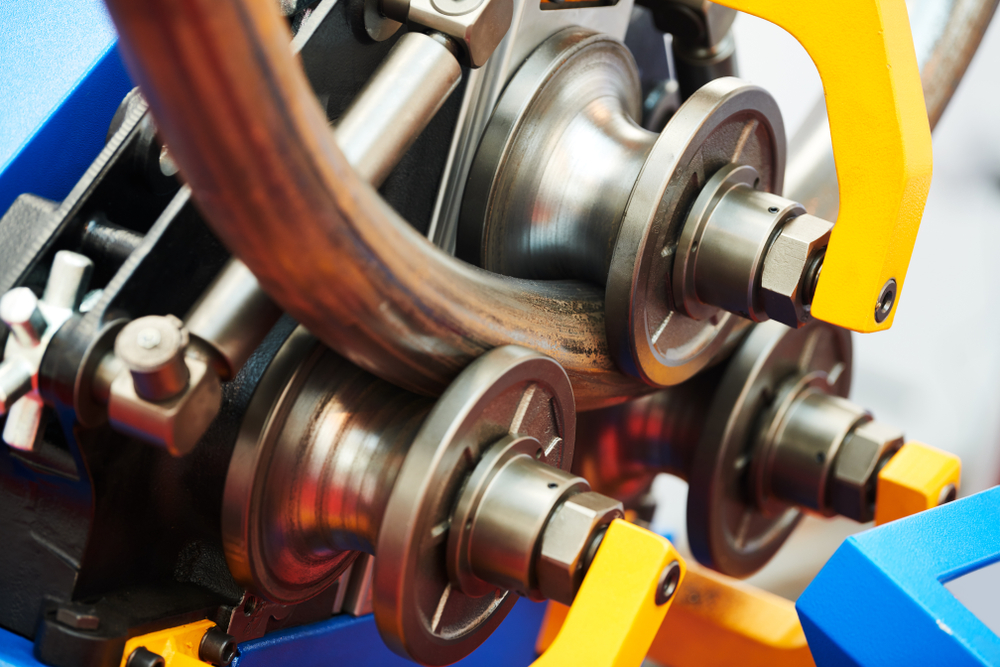
Induction pipe bends are produced by heating a narrow band of pipe with an induction coil while the pipe is pushed through a bending machine at a controlled rate. This process allows fabricators to produce smooth, continuous curves across a wide range of radii and pipe sizes, all in a single piece with no weld seams introduced along the bend arc.
For industrial applications where long routing runs change direction gradually, induction pipe bends offer a direct substitute for several elbows in sequence. A compound curve that would otherwise require three elbows and two intermediate spool pieces can be produced as one continuous component. The reduction in weld count is immediate and substantial.
Beyond the economics, induction pipe bends tend to exhibit better flow characteristics. The gradual transition of a large radius pipe bend produces less turbulence and pressure drop compared to the abrupt direction changes of short-radius elbows. In systems where energy efficiency or flow velocity matters, such as long-distance fluid transmission or high-throughput process lines, this difference has measurable operational value over years of service.
The material integrity of an induction-bent pipe also remains high when the process is properly controlled. Wall thickness on the outer radius is maintained within acceptable tolerances, and the grain structure of the base metal is preserved far better than it would be in a cold-formed elbow. For alloy steels, stainless grades, or chrome-moly materials used in power generation and petrochemical service, this matters both for mechanical performance and for compliance with material certification requirements.
When Custom Pipe Bends Make the Business Case
The economic argument for custom pipe bends versus elbows becomes strongest in specific project scenarios, and recognizing those scenarios during the design phase is where the savings are captured.
Large-diameter piping is one of the clearest cases. As pipe diameter increases, the cost and complexity of each weld joint rises sharply. Fit-up tolerances become harder to maintain, heat input requirements increase, and NDE costs scale with the weld volume. A single induction pipe bend in a 24-inch or 36-inch line can eliminate two or three major weld joints that would each carry four-figure inspection and labor costs.
High-alloy or exotic materials present another compelling case. Welding duplex stainless steel, Inconel, or titanium pipe requires specialized procedures, qualified welders, strict preheat and interpass temperature controls, and extensive post-weld testing. Every weld you eliminate from a system built in these materials is a significant cost reduction and a meaningful reduction in metallurgical risk. Custom pipe bends in these materials, while carrying a higher unit price than carbon steel bends, still come out ahead when the total installed cost comparison is made honestly.
Tight construction schedules also favor large radius pipe bends and custom fabricated bends. Welding, cooling, PWHT, and NDE all take time. A piping spool that arrives on site pre-bent and ready to install reduces schedule risk and minimizes the number of field welds, which are always more expensive and more difficult to perform than shop welds. Prefabrication shops that specialize in industrial pipe bending can often turn around custom bends faster than the field can process the weld inspections they replace.
The Lifecycle Cost Argument: Welds Are Where Systems Age
Capital cost comparisons are only part of the story. Piping systems in refineries, chemical plants, power stations, and offshore facilities are expected to operate for decades. Over that lifespan, every weld joint in the system is a point that maintenance teams must monitor, inspect on scheduled intervals, and eventually repair or replace.
Weld joints in elbows are subject to erosion at the intrados, fatigue loading from vibration and thermal cycling, and flow-accelerated corrosion in certain service conditions. These failure modes are well-documented and account for a significant share of industrial piping maintenance budgets. Fewer weld joints in a system mean fewer of these inspection points, lower ongoing NDE costs, and a statistically lower probability of in-service failures that result in unplanned shutdowns.
Unplanned shutdowns in process industries carry costs that dwarf any initial piping material savings. A single day of lost production in a refinery or chemical plant can represent hundreds of thousands of dollars in lost margin, plus emergency repair costs, safety incident investigation, and potential regulatory scrutiny. Designing systems with fewer weld joints, through the use of custom pipe bends and induction pipe bends, is one of the most straightforward ways to reduce that risk at the design stage, before the system is ever commissioned.
Facility owners who take a total cost of ownership (TCO) perspective consistently find that the upfront premium for custom fabricated bends is recovered many times over in reduced maintenance expenditures and improved system reliability across a 20- or 30-year operating life.
Making the Transition: Practical Steps for Engineers and Procurement Teams
Shifting from a default elbow-based design approach to one that evaluates pipe bends vs elbows on a project-by-project basis does not require a dramatic change in workflow. It requires asking a different question early in the design process: where in this system would eliminating weld joints provide the greatest cost or reliability benefit?
Collaboration between the piping designer and a fabricator experienced in industrial pipe bending should happen at the isometric drawing stage, not after procurement packages are issued. At that point, routing geometries can still be adjusted to take advantage of bend capabilities, and the total installed cost comparison can be made with accurate quotes on both sides.
Specification writers should also revisit standard project specifications that automatically default to elbows for directional changes above a certain diameter or in certain service classes. Adding language that requires a pipe bends vs elbows cost evaluation for high-alloy lines, large-bore systems, or critical service piping gives engineers the mandate to do the analysis rather than defaulting to habit.
Conclusion
Standard elbows earn their place in piping design, but they are not always the most economical choice once the full cost of welding, inspection, and long-term maintenance is accounted for. Custom pipe bends and induction pipe bends offer a direct path to fewer joints, lower installed costs, and more reliable systems over their operating life. The engineers and owners who recognize this early in a project are the ones who capture the savings.
Need an Industrial Machine Shop in Baton Rouge, LA?
Established in 1956, our team here at Metal Works Corporation is an A.S.M.E. certified industrial fabrication company specializing in pipe and tube bending, pipe fabrication, coiling, vessel fabrication, and welding for major industries. Our in house’ machine shop has unique capabilities and produces specialty springs of all alloys, custom rotating mechanical seals, and various other industrial components. We appreciate our customers and work to forge lasting relationships built on trust and reliability. Contact us today and allow our team to be the shortest distance between problem and solution for your unique industrial requirements.